


Today’s sustainable snapshot👇🏽
The Chain Reaction of the War
Earplugs Grown from Mushrooms
Bio-Based Materials, Starting with the Diaper
Turning Fallen Leaves into Plates That Disappear
The Chain Reaction of the War
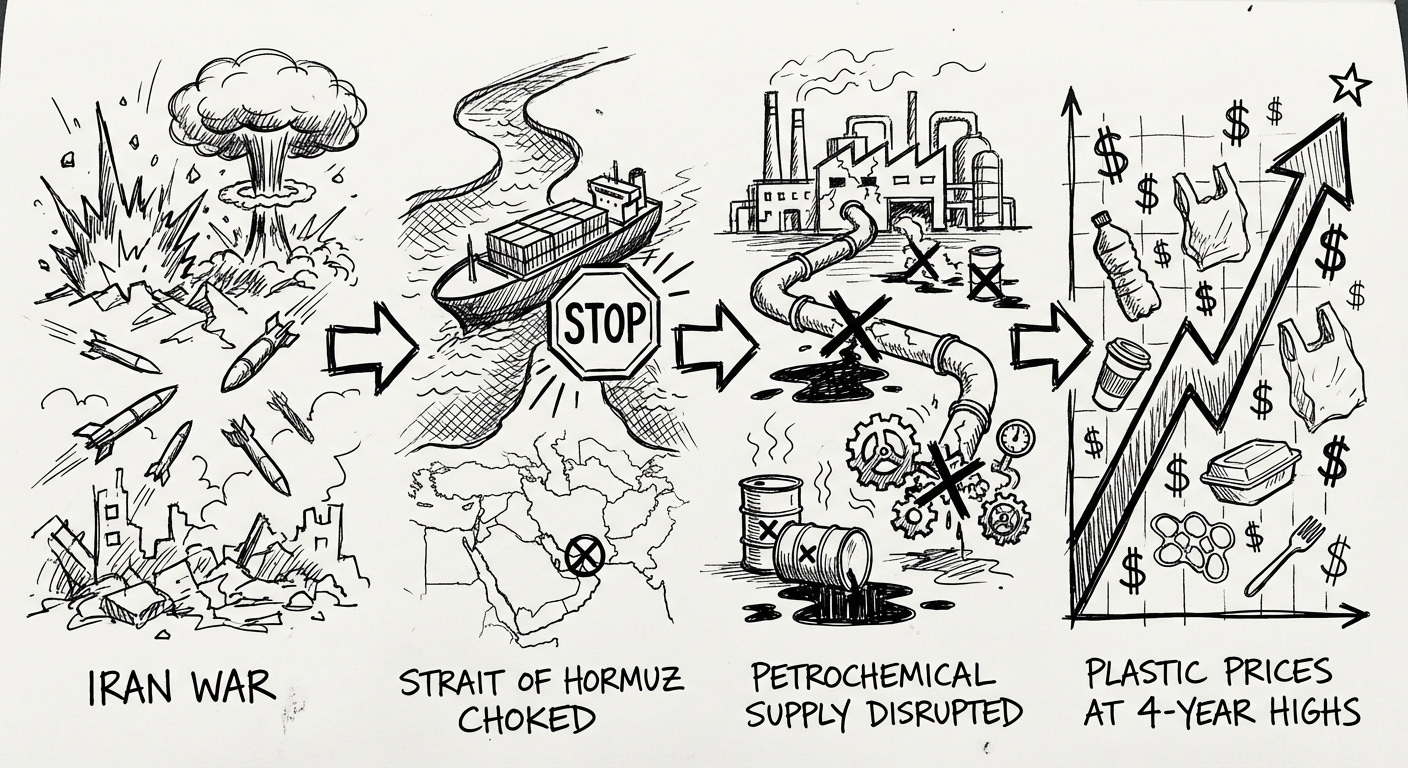
One of the many things that happened as a result of the Iran War was the increase in the prices of plastic. Plastic, like many other materials, is made from petrochemicals. So when the Strait of Hormuz was choked, and the petrochemical supply got disrupted, it also impacted the plastic supply chain.
Let’s get a little technical for a moment.
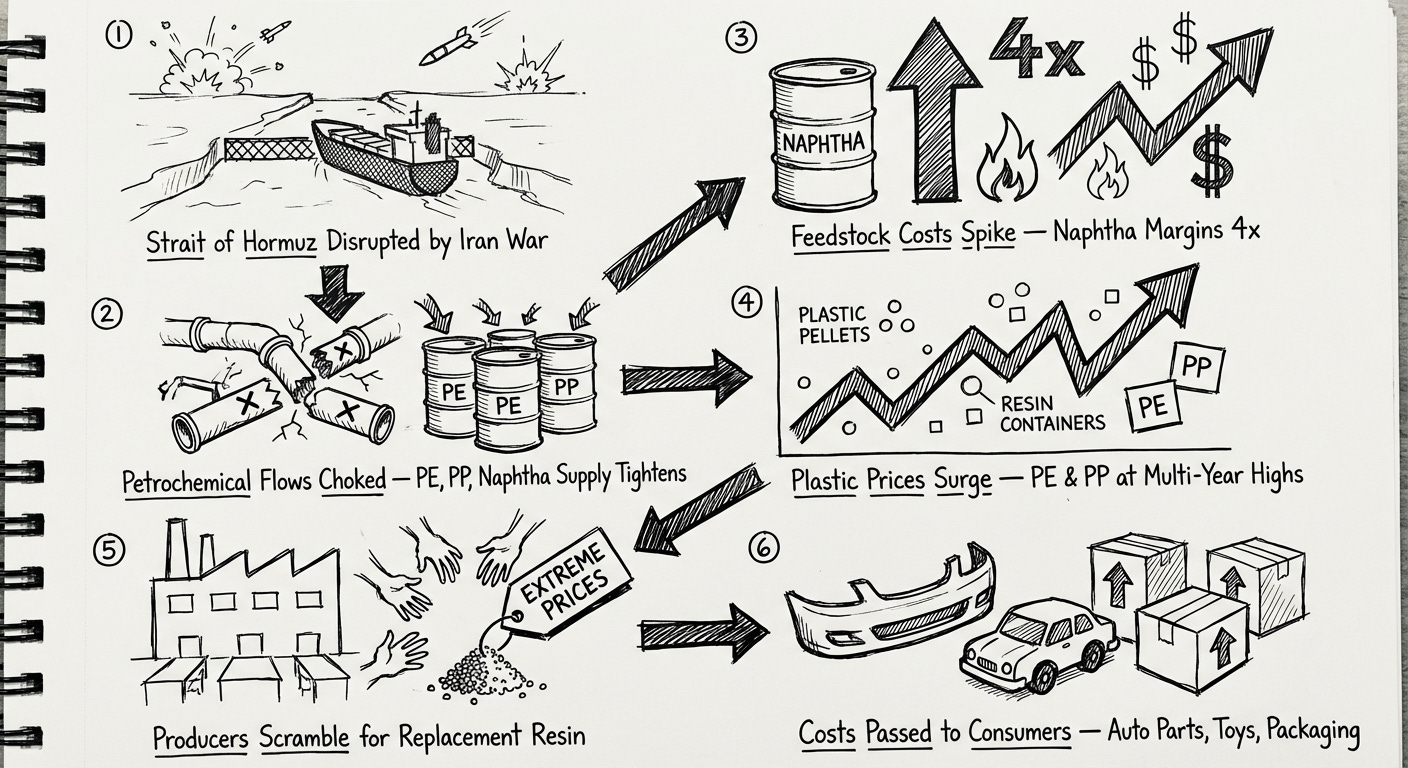
Plastic production depends on petrochemicals, which come from crude oil and natural gas. It starts with extracting and refining crude oil, which produces key feedstocks like naphtha, a lightweight hydrocarbon.
Next, naphtha is “cracked” in high-temperature units into smaller molecules like ethylene and propylene. Those are the basic building blocks for the two most common plastics: polyethylene (PE) and polypropylene (PP).
This matters because the Middle East, led by Saudi Arabia, supplies over 40% of global polyethylene exports. In effect, it is a major warehouse for the world’s plastics.
So when something goes wrong upstream, like the Strait of Hormuz getting choked during the Iran war, the shock travels quickly down the line.
PE and PP prices hit four-year highs, producers scrambled to find replacement resin at much higher prices, and those higher costs eventually showed up in everything from car parts and packaging to toys and everyday household goods.
Now we all hope that the ceasefire is respected and it continues, and we see more peaceful days. But the scenario also shows us how these black swan events can impact our daily lives. This is also a great time to push sustainable alternatives to plastics, ones that are not impacted by the movement of container ships across the globe. And here are 3 brands that are doing that.

Earplugs Grown from Mushrooms
The earplugs that you pick up at concerts, airports, factories, and pharmacies are made from PVC, a petroleum-based plastic. The world manufactures 40 billion of them every year, enough to wrap around the Earth nearly 100 times. And because they’re single-use, almost all of them end up in landfills.
GOB has created the world’s first 100% mycelium earplugs. It’s made entirely from the root structure of mushrooms. No plastic. No fossil fuels. No harmful chemicals.


How it works
GOB partners with Forager (by Ecovative), which grows mycelium foam on agricultural waste. The process can produce 3 million square feet of material per year on just one acre of land. The mycelium is shaped into earplugs that offer up to 20dB of noise protection with balanced acoustic dampening, meaning they block harmful noise while maintaining sound clarity.
The material has memory-foam-like properties, so it conforms to your ear shape without the pressure or irritation you get from traditional plugs.
Why it matters for the plastic crisis
Unlike PVC earplugs, GOB’s product is 100% home-compostable. When you’re done, it breaks down into soil nutrients — no landfill, no microplastics, no centuries-long decomposition. And because it’s grown from fungi, not extracted from oil, it is completely decoupled from the petrochemical supply chain that just got disrupted by the Strait of Hormuz.

Bio-Based Materials, Starting with the Diaper
A disposable diaper is mostly plastic. The core ingredient that makes diapers absorbent is a material called superabsorbent polymers, or SAPs. They’re made from petroleum-derived plastics. Over 27 billion soiled diapers end up in U.S. landfills every year, where they take over 500 years to decompose. And as they break down, they release microplastics into the soil and water.
The global hygiene market that depends on these materials is valued at over $155 billion. All of it is running on the same petrochemical supply chain that just got choked by the Strait of Hormuz.
ZymoChem has built something that could change that. They’ve developed BAYSE™ Bio-SAP, a 100% bio-based and fully biodegradable superabsorbent polymer. Same performance. No petroleum.
How it works
ZymoChem uses a proprietary Carbon Conserving (C2) fermentation process. Think of it like brewing beer, but instead of making alcohol, their engineered microbes convert renewable corn sugar into high-performance materials, with near-zero CO₂ emissions during fermentation. Their process achieves yields up to 50% higher than other bio-manufacturing methods, which is what makes it cost-competitive with fossil-based SAPs.
The result is a drop-in replacement. That means diaper manufacturers don’t need to redesign their production lines. BAYSE™ slots right into existing factory setups, a detail that matters a lot when you’re trying to get big brands to switch.
Why it matters for the plastic crisis
Unlike petroleum SAPs, BAYSE™ is biodegradable and microplastic-free. It breaks down naturally instead of sitting in a landfill for centuries. And because it’s made from corn sugar, not crude oil, it doesn’t depend on naphtha shipments passing through the Strait of Hormuz.
In March 2026, ZymoChem announced that BAYSE™ became the first bio-based superabsorbent to match and outperform petroleum-based materials in third-party testing. In consumer trials, 88% of parents liked the absorbency, and 92% said they’d buy a diaper made with it.

Turning Fallen Leaves into Plates That Disappear
Single-use plastic plates and cutlery are everywhere. Weddings, street food stalls, office parties, festivals, and food delivery. Most of them are used for a few minutes. But they stay on the planet for hundreds of years. India alone generates millions of tonnes of plastic waste every year, and a big chunk of it comes from these single-use items. Even “paper plates” are often coated with plastic, which means they can’t be composted easily.
Agrileaf is solving this with something surprisingly simple: fallen areca palm leaves. Instead of cutting down trees, they collect naturally fallen leaves from farms. No plastic. No glue. No synthetic additives. Just leaves.

How it works
The fallen areca leaves are cleaned and heat-pressed into plates, bowls, and takeaway containers, shaped without chemicals, coatings, or adhesives. The factory, located in the arecanut-growing region of Karnataka, India, is operated by rural women using a fully organic approach. For their takeaway containers, Agrileaf uses a bio-based coating and heat sealing to make them leak-proof, tamper-proof, and resistant to sogginess for hours, engineered to work like modern food packaging without the plastic.
Why it matters for the plastic crisis
After use, Agrileaf’s products can be composted at home or buried in soil, where they break down naturally. No landfill, no microplastics, no centuries-long decomposition. And because the raw material is agricultural residue that would otherwise be burned or discarded, the entire supply chain is local and renewable, completely independent of the petrochemical infrastructure that just got disrupted.

Give that 💚 a little tap if this edition helped you learn something new about sustainability and climate change. Have a good weekend and see you in two weeks :)
Welcome Back
with a renewed and reinvigorated hope in the time of Iran war
So good to see the newsletter back in my inbox!