
The Ocean Is Failing Its Report Card
These clever inventions are fighting back


Today’s sustainable snapshot👇🏽
The Ocean Is Failing Its Report Card
Quiz of the Week
Brand 1: Seabin Project
Brand 2: The Great Bubble Barrier
What Else Did I Publish Recently
The Ocean Is Failing Its Report Card
Plastics have made our lives really convenient.
You are outside and thirsty? Buy a bottle of mineral water.
Forgot to get your own grocery bag? No worries, take this single-use one.
Want to operate on someone? Here, use these surgical gloves.
We usually don’t think about what happens to these products when we dispose them off but most of the plastic that we have ever used is still lying somewhere on the planet. Probably in a landfill and most likely in an ocean.

A recent 1,600-page report from over 650 experts says that over 4,000 marine species are known to be affected by plastics. It impacts their metabolism, immune function, growth, and reproduction.
It’s all happening beneath the ocean surface, so we don’t see them.
Here are some other notable pointers from that report:
The ocean plastic pollution is still rising. It comes from mismanaged waste, littering, marine activities, and the formation of microplastics.
Microplastics (small plastic pieces less than five millimetres long) are not just confined to beaches or floating garbage patches. They are in the deepest depths of the ocean as well.
Single-use plastic is still the major cause of litter and makes up about 40 per cent of global litter, followed by fishing, which contributes around 15 per cent.
Sectors like tourism, fishing, and shipping lose billions of dollars every year through reduced revenue and cleanup costs.
193 members of the UN have been negotiating for the last 6 years to come up with a global plastics treaty, and there hasn’t been a consensus.
Before we dive into the solutions, let’s get this straight: recycling is not the solution to this. It’s a very small part of the overall solution.
We also have to look into reducing plastic production, promoting reuse, designing better products that are not made of multiple products, and finding alternatives to single-use plastics.
Hard to cover all the solutions here, but here are 2 solutions that stop plastic from entering our oceans.
But before that, here’s the quiz of the week:
Time for the quiz of the week
Note: Answer at the end of the newsletter. No one (including me) can see your response, so feel free to vote. 😉
Seabin Project
Seabin is a floating rubbish bin that stays on the water’s surface and removes pollution from a water body. It comes with a submersible pump that can draw in up to 1.3 million litres of water per day, and it skims the top 10mm of the water column.
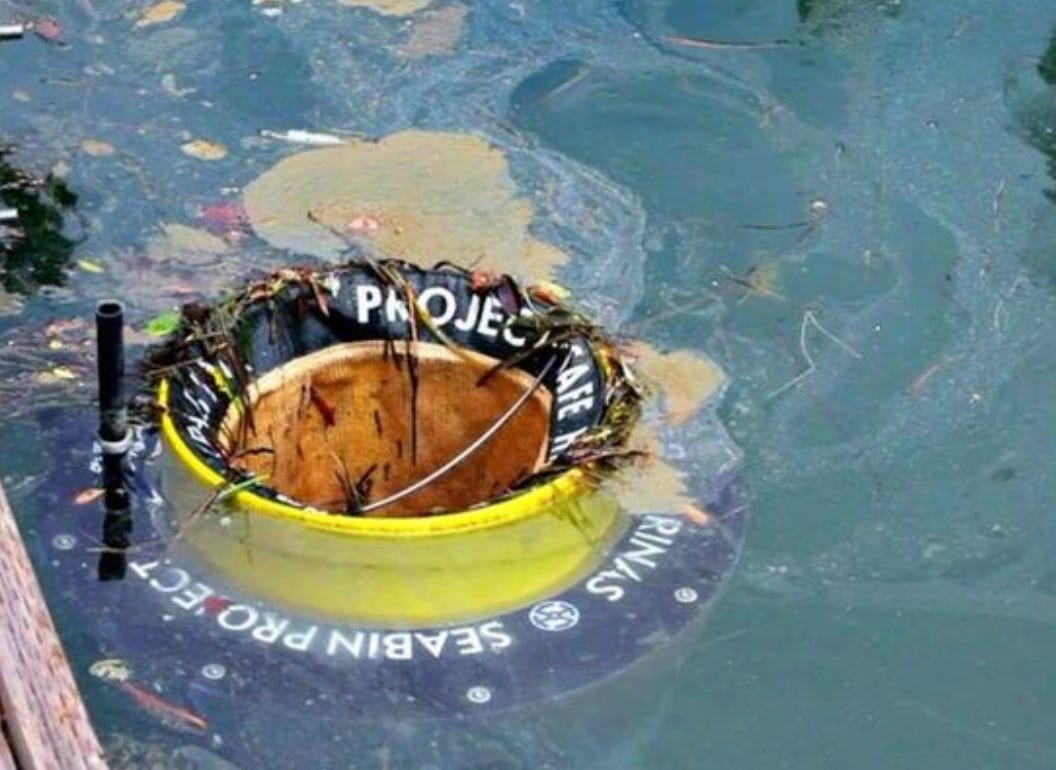
As this water flows through the Seabin, it intercepts plastic waste, microplastics, fibres, oils, and fuel residues. They are collected in a separate, removable catch bag that holds up to 20 kilograms. This can operate 24/7 and is solar compatible.
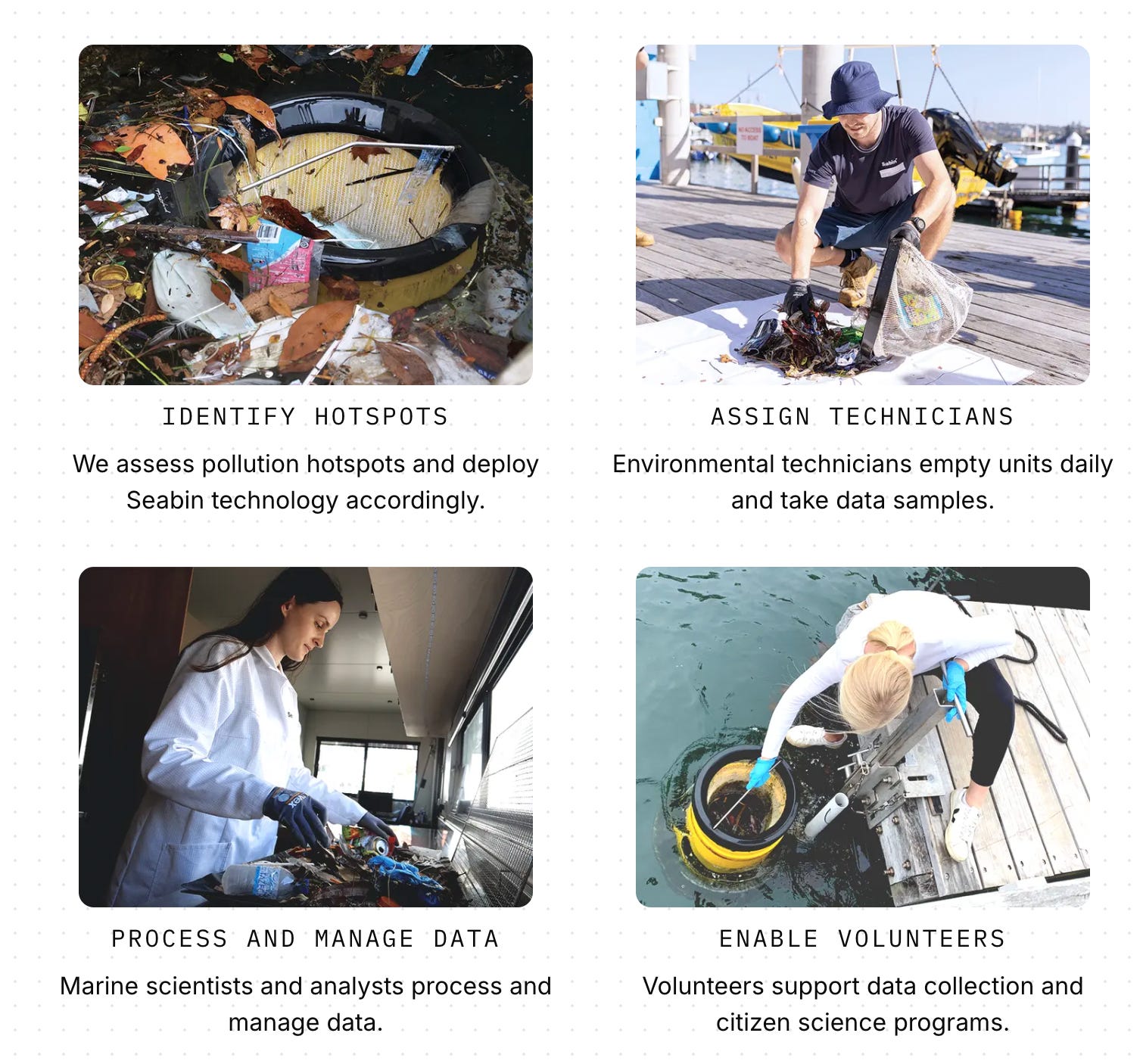
Seabin offers Nature Certificates that work on the “polluter pays” concept. Individuals and companies can buy these certificates to offset their impact, and the funds from them are used to deploy more Seabins and help the team collect, segregate, and analyze the data.
The Great Bubble Barrier
Another solution that is tackling the river pollution is The Bubble Barrier. It creates a bubble curtain that’s an effective and energy-efficient solution to trap and remove plastic without hindering ship or fish passage.
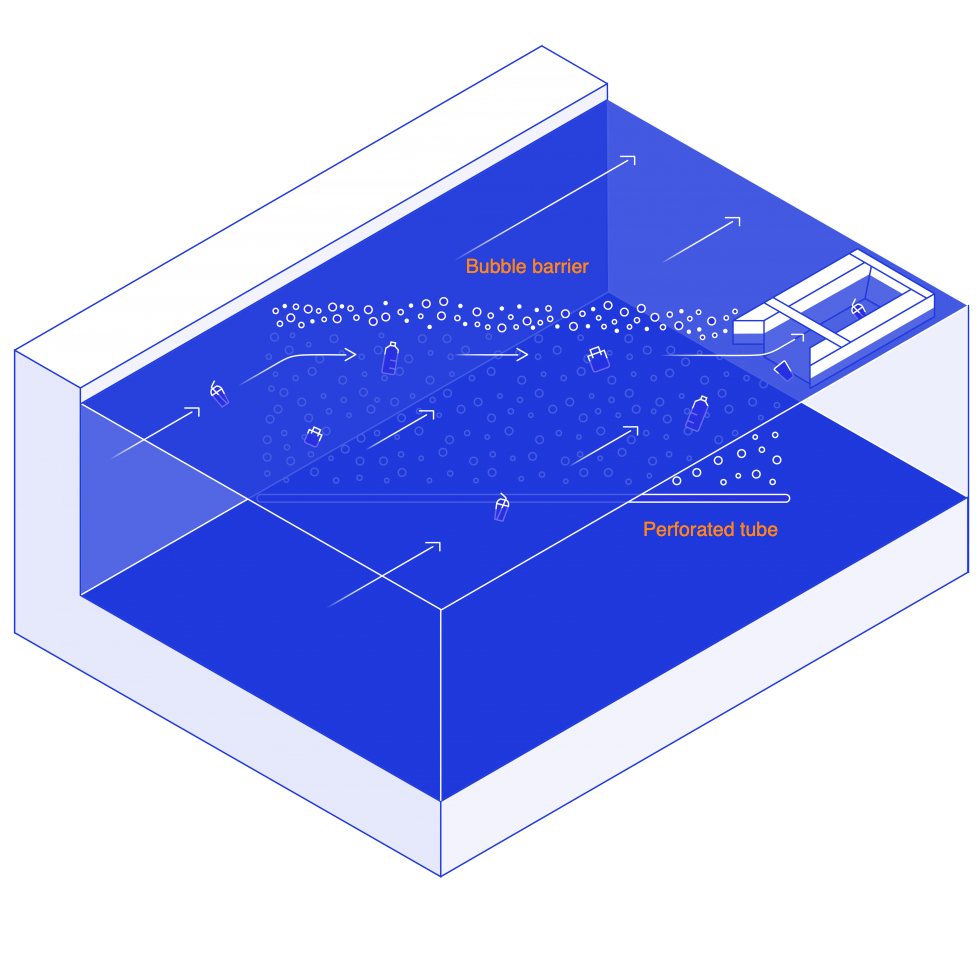
The bubble curtain is created by pumping air through a perforated tube on the bottom of the waterway. It is placed diagonally across the river, and when the natural flow of the river interacts with it, it pushes the plastic waste to the side, into a catchment area. The catchment area collects and retains plastic, which is later sorted for processing and reuse.
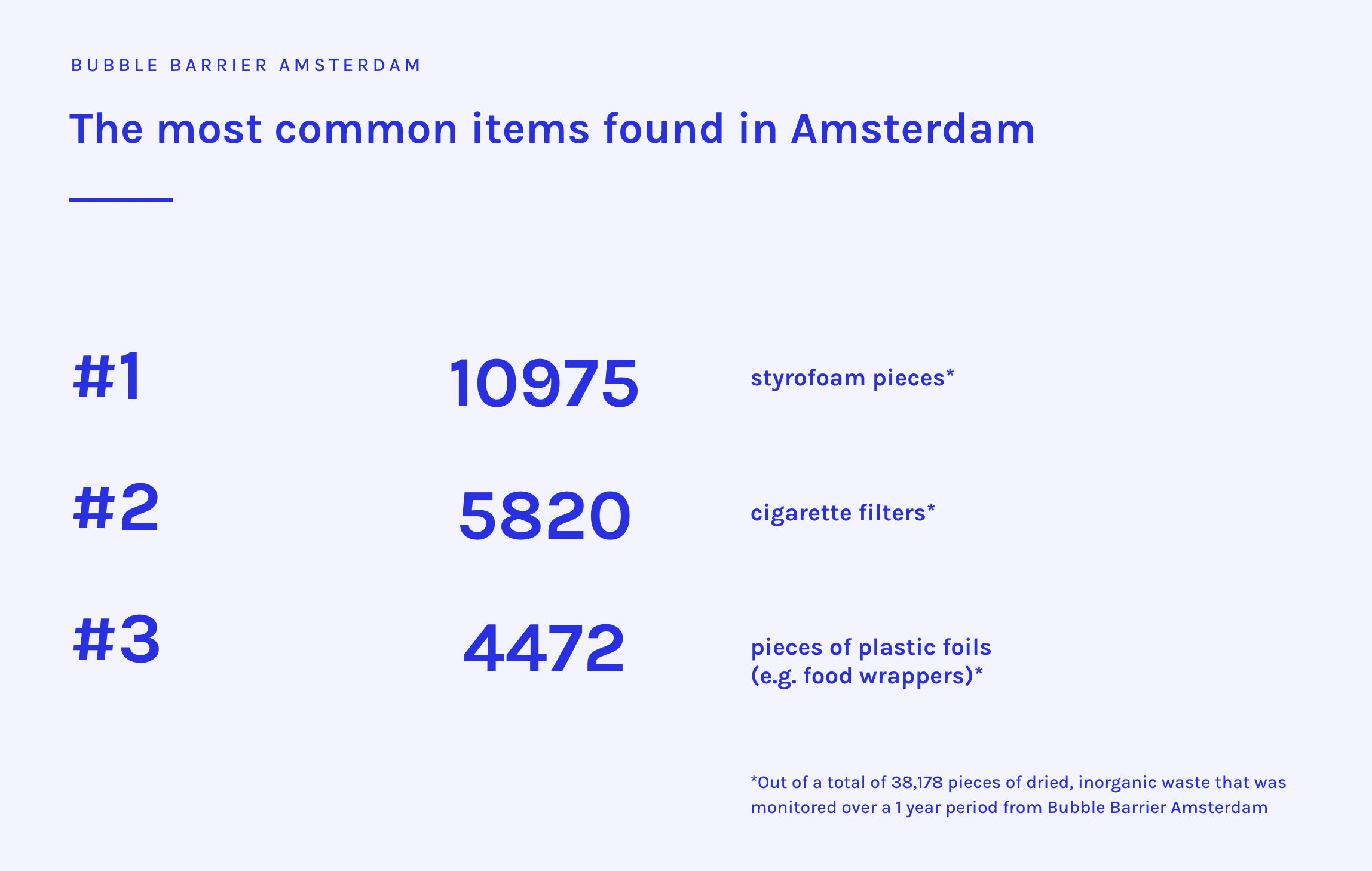
The Bubble Barrier installed in the Westerdok canal in Amsterdam collects around 80 kg or 15.536 pieces of inorganic debris per month. After sorting the waste, this is what they found in the waste stream:
What Else Did I Publish Recently
In the past 5 years, I have written 800+ long-form articles on sustainability. From newsletters and blogs to whitepapers and case studies across B2B and B2C brands. Here are some of the articles that I recently wrote:
If you run a sustainability-focused brand and need help with your long-form content, let’s chat. Hit reply, and we will take it from there :)
Quiz answer: Packaging
Give that 💚 a little tap if this edition helped you learn something new about sustainability and climate change. Have a good weekend and see you next week :)