
This One Is a Big Climate Culprit
Nobody's tracking it


Today’s sustainable snapshot👇🏽
This One Is a Big Climate Culprit
Quiz of the Week
Startup 1: Takachar
Startup 2: Lick
What Else Did I Publish Recently
This One Is a Big Climate Culprit
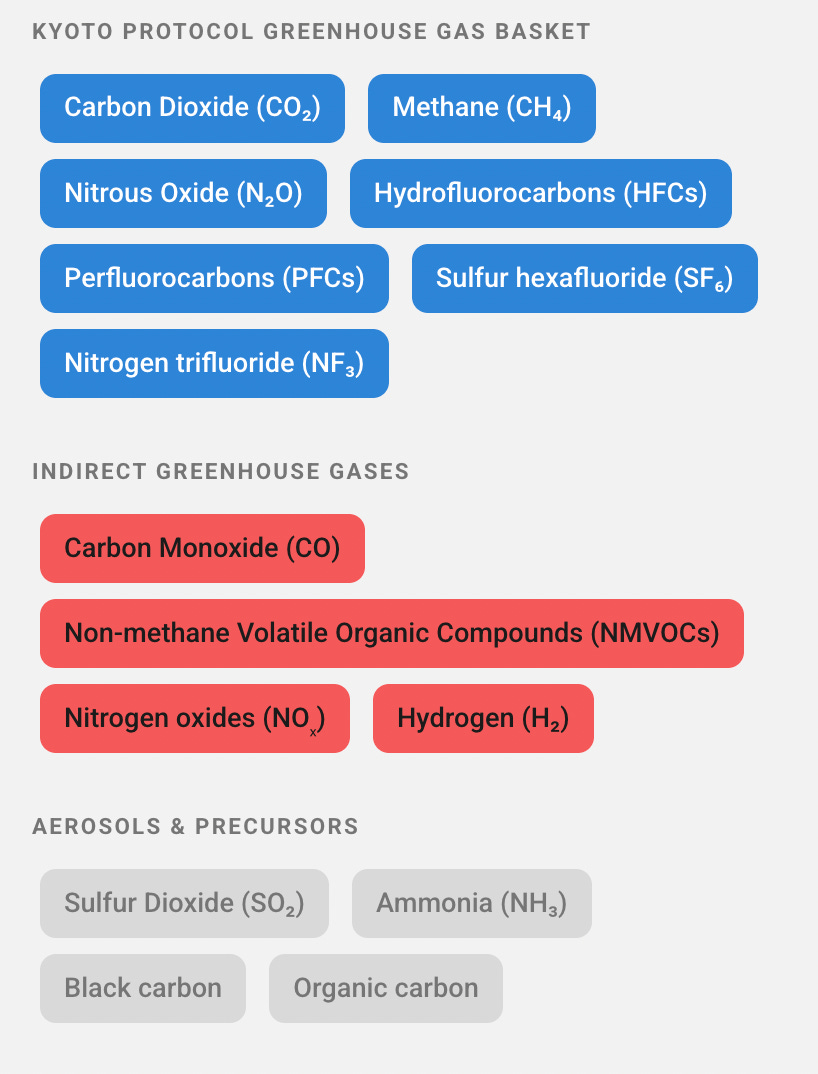
You don’t need to work in the climate space (or think about climate change actively) to know what greenhouse gases (GHGs) are. Traditional GHGs are carbon dioxide, methane, and nitrous oxide. These are also called direct greenhouse gases.
Now there’s another section of greenhouse gases that’s called indirect greenhouse gases, aka iGHGs (fancy name, right?).
These iGHGs include carbon monoxide, nitrogen oxides, molecular hydrogen, and non-methane volatile organic compounds (VOCs).
How Are iGHGs Different From GHGs?
Traditional greenhouse gases cause global warming because they trap the heat directly. iGHGs, on the other hand, don’t trap heat themselves. Once they are in the atmosphere, they trigger chemical reactions that increase the abundance of GHGs, which leads to even more warming.
These gases come from small-scale biomass and coal combustion, open biomass and waste burning, and biogenic emissions from land use and agriculture.
And a recent study found this:
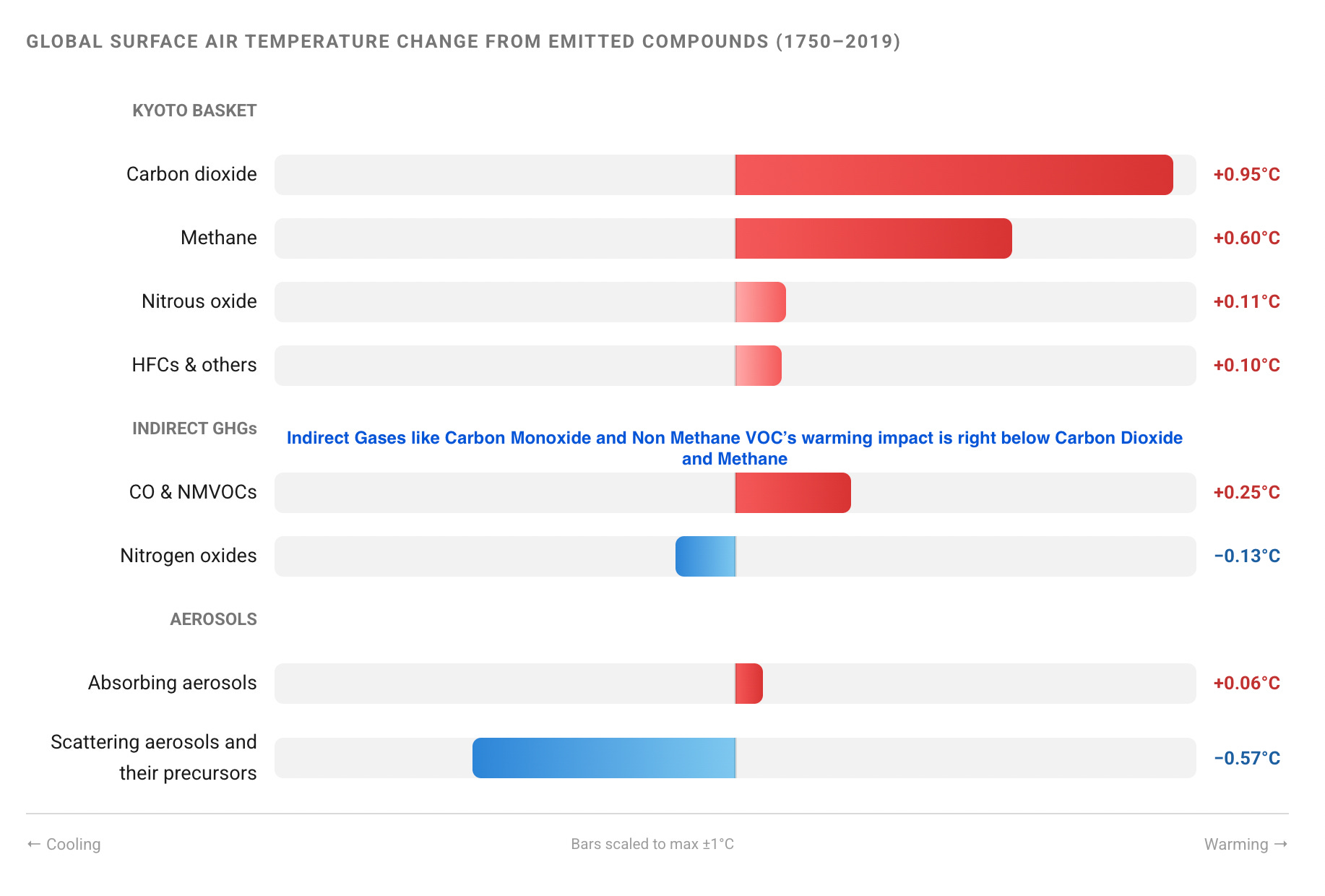
“Among all human-caused emissions that warm the climate, indirect greenhouse gases collectively rank as the third-largest contributor to the warming we experience today after carbon dioxide and methane—ahead of nitrous oxide, hydrofluorocarbons and black carbon.”
It’s Time to Focus on iGHGs
Till now, iGHGs and their impact have been excluded from most of the policy making since they were not part of the GHG basket that was established under the Kyoto Protocol in 1997. Scientists, though, have studied the impact of these iGHGs on the planet for decades. Fortunately, they are also regulated in many parts of the world because of their toxic health effects, but they have never made it to the climate discussions, such as the Paris Agreement or the U.N. Framework Convention on Climate Change.
“This is a significant contributor to warming that has been left out of climate policy discussions for far too long,” said the paper’s lead author, Ilissa Ocko, a senior climate scientist at Spark Climate Solutions and former senior adviser to the U.S. special presidential envoy for climate.
As always, some brands are helping solve these problems.
But before that, it’s time to test your knowledge:
⌛ Time for the quiz of the week
iGHGs don't trap heat themselves — they "trigger chemical reactions that increase the abundance of GHGs."
Note: Answer at the end of the newsletter. No one (including me) can see your response, so feel free to vote. 😉
Takachar
Slash and burn…To clear their fields from the previous harvest and prepare them for planting, farmers burn corn stalks, rice husks, hay, straw, and other waste. Globally, around $120 billion worth of crop and forest residues are burned in the open each year. This creates both GHG and iGHG emissions, like carbon monoxide.
Do this instead…Takachar is on a mission to reduce this emission. They have built a small-scale, low-cost, portable piece of equipment that can be installed on the back of tractors and pick-up trucks. It can convert crop residues into marketable products like fertilizer or fuel.
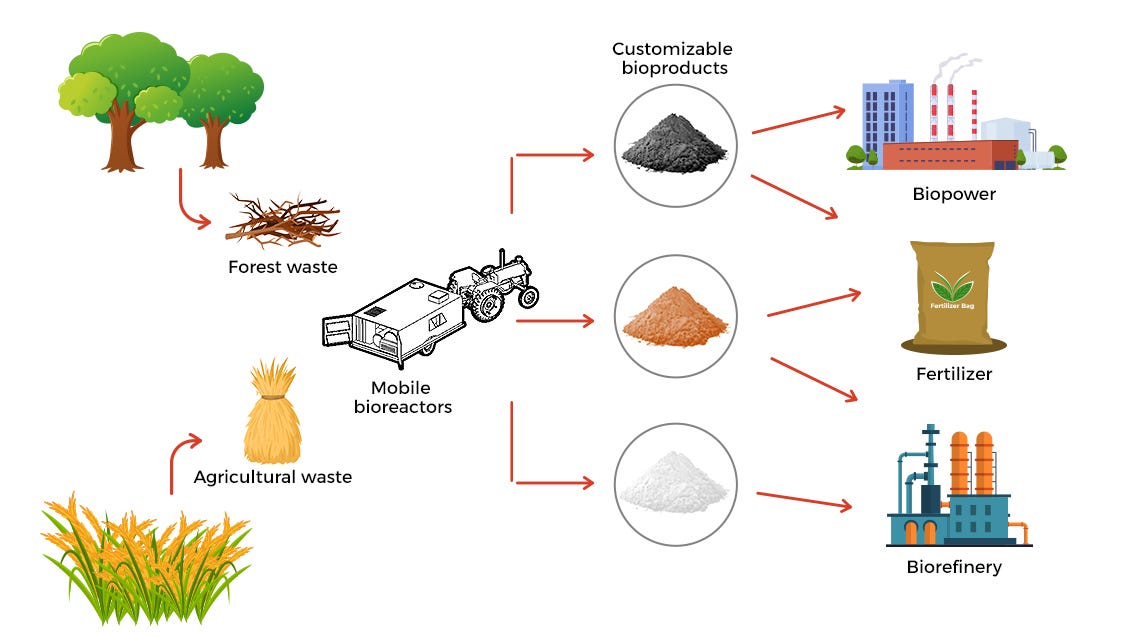
Earn while you don’t burn…Takachar sells this equipment to farmers. The farmers own and operate them with training from Takachar. In return, farmers sell the agricultural waste to Takachar, and the company is able to sell the fertilizer blend. This reduces waste and allows farmers to make money while reducing emissions.
Lick
Fume & Doom…Traditional paints contain solvents, binders, and colorants that release Non-Methane Volatile Organic Compounds (NMVOCs). Beyond iGHGs, they can be a health hazard—causing headaches, dizziness, and itchy eyes—and may even contribute to low birth weight or learning disabilities for newborns.
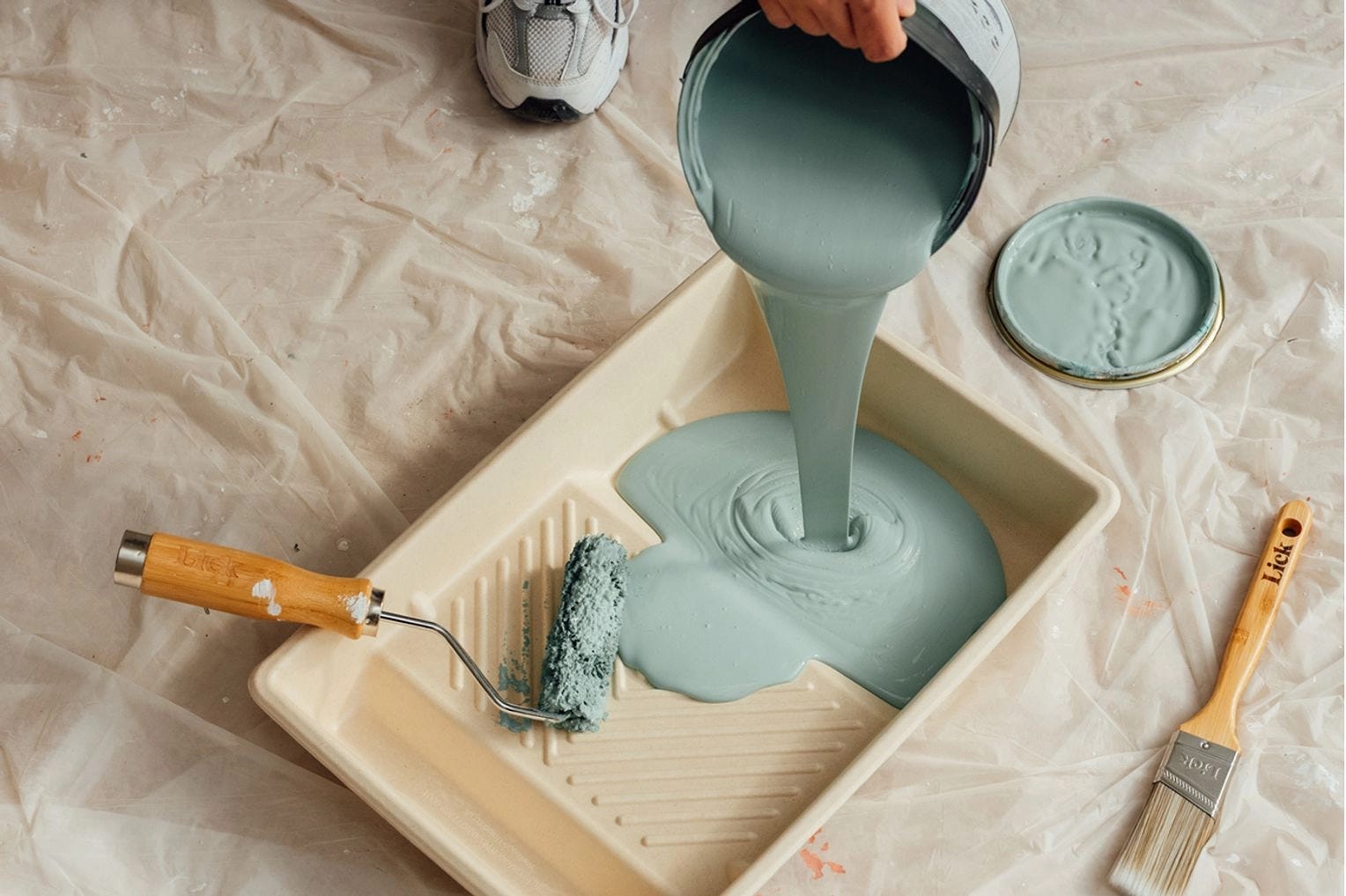
Low-VOC, High-Five…Lick tackles this with durable, washable, water-based paints that are low VOC. None of their paints are tested on animals, and they’re 100% vegan. Plus, per tin sold, Lick cleans up 18g of plastic from the oceans.
Roll Model…They also offer wallpapers that are sustainably sourced, and they plant a tree for each roll sold. They’ve built proprietary peel-and-stick samples so homeowners can preview colours at home without creating waste.
What Else Did I Publish Recently
In the past 5 years, I have written 800+ long-form articles on sustainability. From newsletters and blogs to whitepapers and case studies across B2B and B2C brands.
If you run a sustainability-focused brand and need help with your long-form content, let’s chat. Hit reply, and we will take it from there :)


Quiz answer: Tropospheric ozone
Give that 💚 a little tap if this edition helped you learn something new about sustainability and climate change. Have a good weekend and see you next week :)